
Maa Brahmacharini: Lessons in Devotion and the Joy of Feeding Others
A Navratri Morning, a Prayer, and a Plate of Food
A mother lights a small lamp before beginning her morning prayers. Her daughter sits beside her, watching the flame move gently in the quiet room. Flowers rest near the altar, and the fragrance of incense fills the air.
“Which form of Maa Durga do we remember today?” the child asks.
“Maa Brahmacharini,” her mother replies. “She reminds us of devotion, patience, and the strength to remain faithful to a sacred purpose.”
Later that morning, they step outside. Near a busy road, they notice a tired worker sitting quietly. People hurry past him, carrying shopping bags and festival offerings. The daughter looks back at her mother.
“If devotion makes our hearts kinder, can we help him have a meal?”
Her mother pauses. The question is simple, but it changes the meaning of the morning. The prayer they began at home now asks something of their hands, their time, and their willingness to share.
This imagined scene invites us to reflect on our own Navratri observance. Alongside worship, chanting, and personal discipline, can we make room for someone who needs food?
Maa Brahmacharini’s example of steadfastness offers a beautiful starting point. The Bhagavad Gita helps us consider how that steadfastness can shape our conduct. At ISKCON Ghaziabad, we invite you to express this spirit through support for annadaan and prasadam seva.
Who Is Maa Brahmacharini?
Maa Brahmacharini is traditionally worshipped on the second day of Navratri. She is revered as the ascetic form of Goddess Parvati, associated with austerity and unwavering devotion in her pursuit of Lord Shiva as her consort.
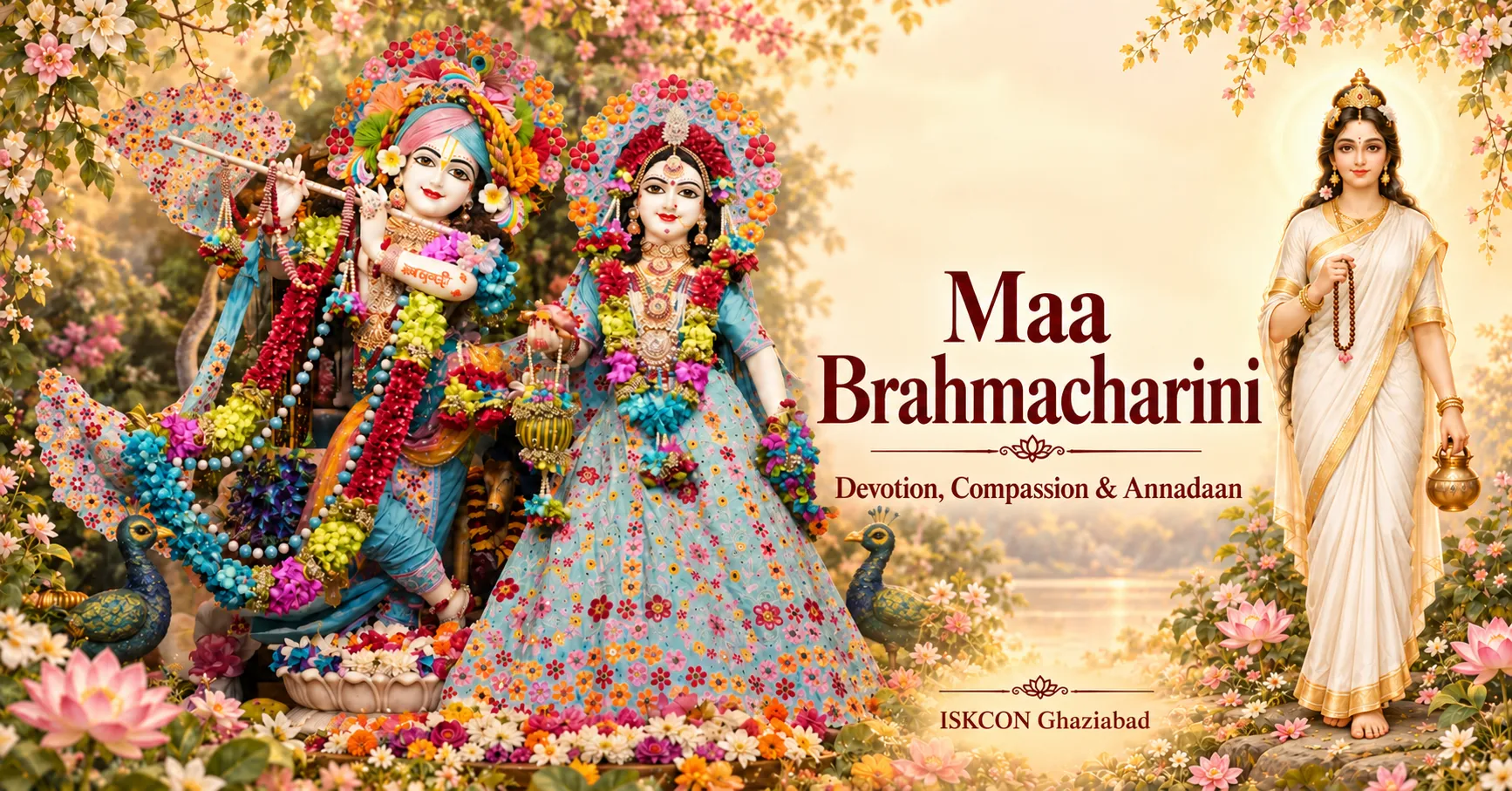
Her traditional appearance is simple: white clothing, a rosary, and a water pot, or kamandalu. This image brings attention to spiritual dedication rather than worldly display. Her story is remembered for patience, restraint, and commitment through difficulty.
For a contemporary devotee, these qualities raise practical questions. How do we remain steady when prayer feels difficult? How do we reduce unnecessary distractions? How can our spiritual commitments influence the way we treat others?
Remembering Maa Brahmacharini can encourage us to approach these questions sincerely. The value of such reflection lies in the choices that follow: a calmer response, a promise kept, a simpler habit, or a thoughtful act of service.
Navratri gives families an opportunity to speak about these values together. Children can learn that devotion includes responsibility, while adults can examine whether their daily behaviour reflects the ideals they honour in worship.
Understanding Maa Brahmacharini Through a Bhagavad Gita Perspective
The Bhagavad Gita does not directly narrate Maa Brahmacharini’s Navratri story. This article draws a reflective connection between her traditionally celebrated qualities and Krishna’s teachings about discipline, devotion, compassion, and charity.
Keeping that distinction clear allows us to appreciate both traditions respectfully. Maa Brahmacharini’s story belongs to the devotional understanding of Navadurga. The Gita provides teachings that can guide our response to the values her form brings to mind.
For readers approaching Navratri from an ISKCON perspective, the central practice remains loving devotional service to Lord Krishna. Hearing the Gita, remembering Krishna, chanting His holy names, and sharing food offered to Him give that practice daily expression.
The connection explored here is therefore practical. Steadfastness can help us maintain spiritual habits. Simplicity can create space for generosity. Compassion can lead us to notice hunger nearby. Responsible giving can help turn an intention into organised service.
We can begin with one question: what would change today if our devotional reflection became an action that benefited another person?
Spiritual Discipline Begins With Everyday Choices
It is easy to associate austerity with extraordinary acts. Yet everyday discipline often begins quietly: waking at a regular time, setting aside a few minutes for prayer, completing a responsibility, or resisting an impulse to speak harshly.
Consider a person who decides to read a small passage of the Bhagavad Gita each morning. Some days feel peaceful; others are crowded with work and family duties. Continuing with a manageable practice develops steadiness over time.
The same principle applies to seva. A volunteer who arrives when promised, a donor who follows through on a commitment, or a family that remembers to share regularly contributes to dependable service.
Maa Brahmacharini’s example can inspire this attitude of perseverance. We need not measure sincerity by dramatic gestures. A small promise honoured repeatedly can shape character and strengthen a community.
During Navratri, choose a commitment you can maintain. It might be daily chanting, respectful speech, less food waste, or support for a meal programme. Let the practice be clear enough to follow and meaningful enough to remember after the festival ends.
Fasting and Hunger: A Difference That Inspires Compassion
Navratri fasting can be a chosen devotional observance. Involuntary hunger is a hardship faced by someone who cannot reliably obtain food. Recognising this difference can deepen our concern for others.
In Bhagavad Gita 6.16, Krishna explains that the practice of yoga is hindered by extremes in eating and sleeping. The verse directs attention to balance rather than excess or excessive deprivation.
That teaching offers a useful perspective when reflecting on discipline. Spiritual practice should cultivate steadiness and attentiveness. The traditional account of a divine personality’s austerities should not become an instruction to imitate extreme deprivation.
For those observing a fast, the experience may also provide a moment to remember people who have no choice about missing a meal. Such remembrance can lead to annadaan: contributing towards food for someone else while pursuing one’s own devotional observance.
We can also serve by reducing waste. Preparing sensible quantities, handling food carefully, and coordinating distribution responsibly honour the resources that make a meal possible.
When restraint makes us more aware of another person’s needs, a personal practice acquires a compassionate expression.
The Gita Connects Devotion With Compassion
In Bhagavad Gita 12.13–14, Krishna describes qualities of a devotee dear to Him, including freedom from envy, friendliness towards living beings, compassion, self-control, and determination in devotional service.
These qualities encourage us to look beyond our own comfort. A person needing food is someone to approach with kindness and respect. A meal should be offered in a way that preserves dignity, without demanding praise or exposing someone’s difficulty for attention.
The practical application begins with our attitude. We can listen patiently, avoid insulting language, and remember that difficult circumstances do not lessen a person’s worth.
Compassion also asks us to act thoughtfully. Before arranging a distribution, we should understand the need, coordinate with those organising the service, and consider safe preparation and suitable serving arrangements.
In this reflection on Maa Brahmacharini, determination and kindness belong together. Determination helps us continue serving; kindness guides how we serve. Both matter when devotion moves from a personal intention into a shared responsibility.
Why Prasadam Distribution Matters in ISKCON
In ISKCON practice, suitable vegetarian food is prepared and offered to Lord Krishna before being received as prasadam. Sharing prasadam brings food service together with devotional offering.
Bhagavad Gita 9.26 teaches that Krishna accepts a simple offering of a leaf, flower, fruit, or water when it is made with devotion. The verse places loving intention at the centre of the offering.
Bhagavad Gita 3.13 speaks about accepting food that remains after sacrifice. In Krishna conscious practice, this teaching supports offering food to the Lord and receiving His prasadam with gratitude.
These teachings help explain why a simple meal has spiritual significance for devotees. The preparation, offering, and sharing become opportunities to remember Krishna and cultivate service.
Food distribution also requires ordinary care: clean ingredients, careful cooking, appropriate storage, and respectful serving. Devotional intention should encourage attention to these responsibilities.
When you support prasadam seva, you help make this combination of offering and sharing possible. The meal reaches another person through the work of many hands, each contributing to a common purpose.
Srila Prabhupada’s Vision: No One Should Go Hungry Nearby
ISKCON’s official food-relief page attributes this instruction to Srila Prabhupada:
“No one within ten miles of an ISKCON temple should go hungry.”
Ten miles is approximately sixteen kilometres. This is the distance used in the published statement, rather than ten kilometres.
The instruction expresses a vision and responsibility for service. It should not be read as a claim that every ISKCON temple has already eliminated hunger throughout that radius.
For a temple community, the vision invites attention to the neighbourhood. Worship takes place within the temple, while the responsibility to care extends towards people living and working around it.
For ISKCON Ghaziabad, this ideal gives purpose to our appeal for support. We ask society to help sustain food seva so that more people can be served through collective effort.
Remembering Srila Prabhupada’s instruction means considering what we can contribute now. A donation, a supply of suitable ingredients, or a reliable commitment of time can help translate concern into practical service.
Why Your Contribution Is Important
A plate of food is the result of many contributions. Ingredients must be obtained, meals prepared, utensils cleaned, and distribution organised. The people carrying out these tasks need resources and dependable support.
Your contribution becomes part of that shared effort. It can help support the necessities involved in preparing and distributing food, according to the temple’s current seva arrangements.
You do not need to wait until you can sponsor a large occasion. Giving according to your capacity is a meaningful way to participate. A modest contribution offered regularly can also help organisers plan more consistently.
We do not promise that a particular donation will produce wealth, remove every difficulty, or guarantee a desired result. The invitation is to serve with sincerity and help meet a real need.
This Navratri, let your remembrance of Maa Brahmacharini inspire a commitment you can keep. Your part matters because community service depends on people choosing to participate, each within their means.
What the Bhagavad Gita Teaches About Giving
Bhagavad Gita 17.20 describes charity in the mode of goodness as giving from a sense of duty, without expecting repayment, at an appropriate time and place, and to a suitable recipient.
The verse invites thoughtful generosity. Consider why you are giving, how the contribution will be used, and whether the service is organised responsibly. A sincere intention can be supported by clear communication and sensible questions.
Giving without expectation of return also changes the relationship between donor and recipient. The recipient need not carry a debt of gratitude or provide public recognition. The act can remain an offering of service.
For annadaan seva, this means looking for a responsible way to help provide meals. Ask the temple team about current needs, available sponsorship arrangements, and the official method for making a donation.
The teaching encourages generosity guided by discernment. It gives us a reason to make our contribution carefully and a reminder to keep pride from becoming the centre of the act.
Society’s Role in Sustaining Annadaan Seva
Food service becomes stronger when responsibility is shared. Families, local businesses, resident groups, students, and working professionals can each contribute in ways suited to their circumstances.
A family might reserve part of its festival budget for annadaan. Colleagues might make a collective contribution. A shopkeeper might ask whether suitable ingredients are needed. A resident group might help communicate a verified seva appeal.
Coordination matters. Before bringing supplies or arranging volunteers, contact the temple team. Ingredients, quantities, timing, and storage requirements should match the actual need so that goodwill becomes useful support.
Community participation can also continue beyond Navratri. Hunger does not follow a festival calendar. People need food on ordinary working days as well as sacred occasions.
A continuing commitment gives the values celebrated during Navratri a place in everyday life. When society participates steadily, the work of serving meals becomes less dependent on a single person or one day of enthusiasm.
Begin with a conversation at home about what your household can offer comfortably. Decide together, involve children in understanding the purpose, and keep the commitment realistic. Such discussions help make generosity a family habit, while teaching that service requires attention, cooperation, and respect for everyone involved in preparing each meal.
How to Support Food Donation at ISKCON Ghaziabad
Begin by contacting ISKCON Ghaziabad through its official temple channels and asking about the current annadaan or prasadam seva opportunities.
You can ask about making a financial contribution, sponsoring a distribution, offering suitable ingredients, or volunteering. Confirm the arrangements before committing so that your support fits the service being organised.
Use the temple’s verified donation method. If you need a receipt or information about a particular sponsorship, request those details from the seva team. A clear conversation helps both donors and organisers understand the commitment.
You may also invite relatives or friends to participate by sharing accurate information from the temple. Avoid making claims about meal numbers, costs, or benefits unless those details have been confirmed.
Whatever form your support takes, approach it with humility. The purpose is to help the service reach people with care. A thoughtful contribution, combined with responsible coordination, can become a valuable part of that effort.
Frequently Asked Questions
What is the significance of Maa Brahmacharini?
Maa Brahmacharini is traditionally associated with austerity, patience, and steadfast devotion. Remembered on Navratri’s second day, her form encourages reflection on simplicity and spiritual commitment.
Does the Bhagavad Gita mention Maa Brahmacharini directly?
The Gita does not directly tell her Navratri story. The connections in this article are reflections on related values, including discipline, compassion, devotional offering, and responsible charity.
What is annadaan seva?
Annadaan means giving food. In an ISKCON devotional setting, food seva can include sharing vegetarian meals offered to Krishna as prasadam.
Is a small donation useful?
You can participate according to your capacity. Ask the temple about its current arrangements; both occasional contributions and continuing support can help sustain organised service.
Did Srila Prabhupada say ten kilometres or ten miles?
ISKCON’s published food-relief statement uses ten miles, approximately sixteen kilometres. It expresses an ideal of ensuring that people near an ISKCON temple do not go hungry.
This Navratri, Let Your Devotion Become Seva
Return to the imagined child at the beginning of this story. Her question remains a gentle invitation: can the devotion we practise at home help us respond to someone who needs a meal?
Remembering Maa Brahmacharini can inspire steadiness. Studying the Bhagavad Gita can guide our intentions. Supporting annadaan can give our concern a practical expression.
At ISKCON Ghaziabad, we invite you to join this effort. Society’s support is essential, and your participation is an important part of it. Give according to your capacity, ask about current seva needs, and help sustain the work of sharing prasadam.
Support annadaan and prasadam seva with ISKCON Ghaziabad. Contact the temple through its official channels to donate or discuss a sponsorship.
Let a prayer become a thoughtful action. Let a personal commitment become shared service. Together, we can work towards Srila Prabhupada’s vision with sincerity, care, and continuing effort.