Maa Kushmanda: Bringing Light, Hope and the Joy of Giving
A Small Smile on a Navratri Morning
Imagine a Navratri morning in a family home.
A grandmother is preparing flowers for prayer while her granddaughter watches a small lamp beside the altar. Sunlight enters through the window, and the kitchen carries the warm fragrance of freshly prepared food.
“Who do we remember today?” the child asks.
“Maa Kushmanda,” her grandmother replies. “In the traditional story, her divine smile brings light to the universe.”
The child thinks for a moment. “Can a smile bring light to someone’s day?”
Later, the family walks through their neighbourhood. They notice an elderly man sitting quietly outside a shop. The grandmother greets him respectfully and asks whether he needs help. When he explains that he has not eaten, she speaks with her family about arranging a meal.
The little girl remembers their conversation. The morning’s story has become something she can understand: a kind expression, a listening ear, and a practical response to another person’s need.
This imagined scene introduces a reflection for Navratri Day 4. As we remember Maa Kushmanda’s association with light and creation, how can we bring warmth into everyday life?
Through Bhagavad Gita teachings and annadaan seva, we can explore ways to turn gratitude into action. At ISKCON Ghaziabad, we invite you to participate in the work of sharing prasadam with care and respect.
Who Is Maa Kushmanda?
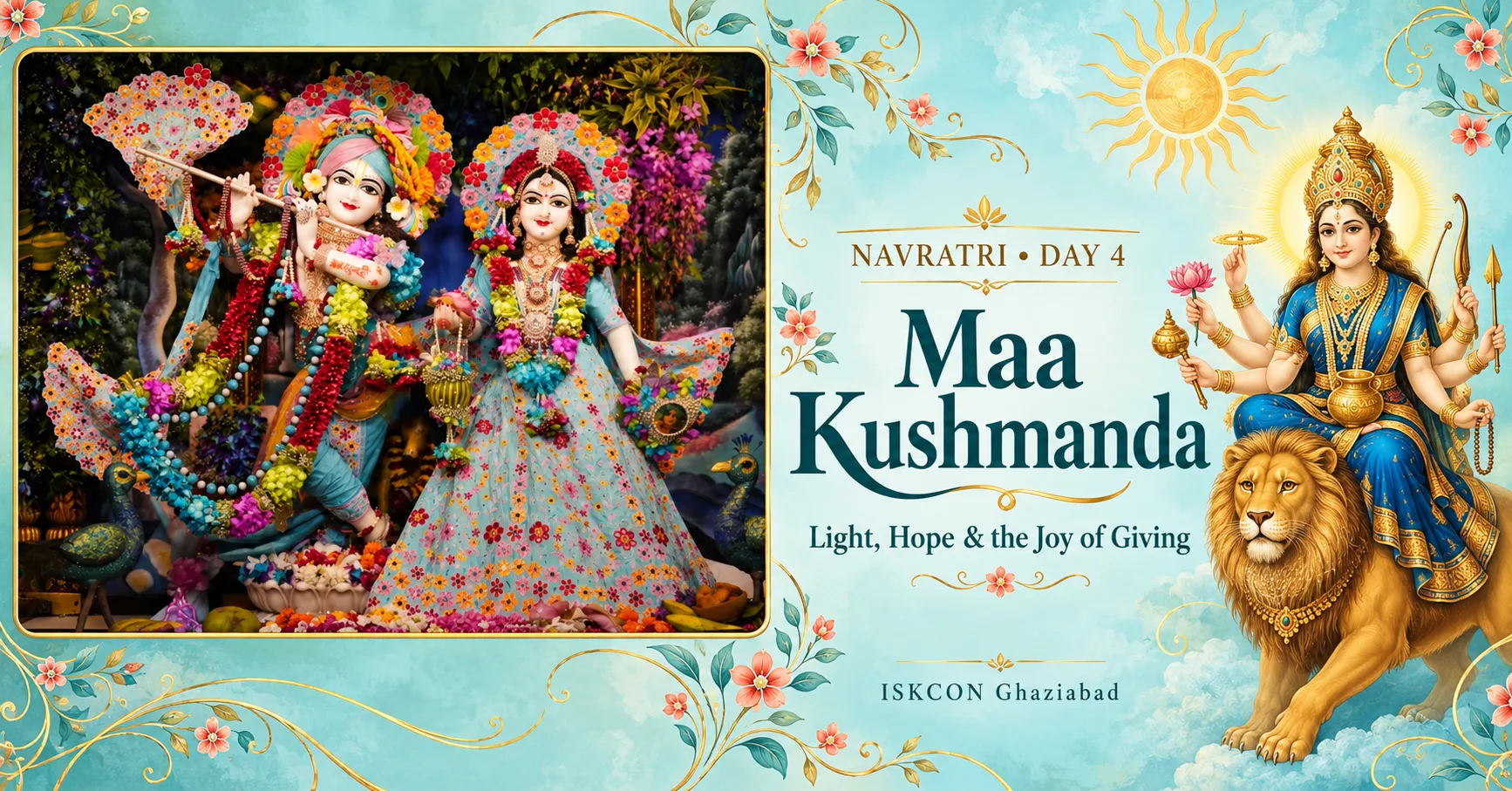
Maa Kushmanda is traditionally worshipped as the fourth form of Navadurga. Devotees remember her on Navratri’s fourth day and associate her with creation, radiance, and life-sustaining energy.
She is commonly depicted with eight arms and is therefore called Ashtabhuja Devi. Her sacred implements vary between representations, and her form expresses both nurturing power and protective strength.
The Navratri tradition celebrates her as a source of light in primordial darkness. For devotees, this image invites reflection on hope and the possibility of a fresh beginning.
We can carry that reflection into ordinary life. A thoughtful conversation may reassure someone. A responsibility fulfilled may ease another person’s burden. A contribution towards food seva may help make a meal possible.
Maa Kushmanda’s Story and the Meaning of Her Name
In the traditional devotional account, darkness existed before creation, and Maa Kushmanda brought the universe into being through her divine smile. She is also associated with the sun’s radiance and sustaining energy.
One popular explanation of her name combines ku, meaning little, ushma, meaning warmth or energy, and anda, meaning egg. The resulting imagery connects warmth and the cosmic egg with creation. Kushmanda is also associated with a gourd in traditional explanations.
These ideas belong to devotional storytelling and symbolism. They are expressions of religious belief rather than a scientific account of the universe’s origin.
For a reader seeking a practical lesson, the story can inspire gratitude for the conditions that sustain life. Light, water, food, and the labour of others support us each day.
When we acknowledge that dependence, generosity becomes easier to understand. We can receive our own nourishment gratefully while considering how to share with someone who needs support.
Navratri Day 4 in 2026: Date and Royal Blue Colour
Popular Sharad Navratri calendars identify Wednesday, 14 October 2026, as Day 4, dedicated to Maa Kushmanda. Royal blue appears as the day’s colour in widely followed 2026 colour lists.
Daily colour customs can vary between regions, communities, and calendars. Wearing royal blue is an optional way to participate in the festive tradition, rather than a universal requirement for worship.
You may choose a blue garment, a simple cloth for your prayer space, or a small decorative accent. There is no need to purchase something new if you already have suitable clothing or materials.
The day’s deeper purpose can remain spiritual reflection and sincere practice. A colour may help us remember the occasion, while our conduct gives that remembrance substance.
A Bhagavad Gita Perspective on Light and Creation
The Bhagavad Gita does not directly narrate Maa Kushmanda’s Navratri story. An ISKCON perspective should distinguish the traditional account from Krishna’s teachings rather than presenting them as identical explanations.
In Bhagavad Gita 9.10, Krishna explains that material nature operates under His supervision and produces the moving and nonmoving beings. In 15.12, He identifies the radiance of the sun, moon, and fire as coming from Him.
These teachings encourage remembrance of Krishna as we observe the world around us. The morning’s light and the resources used to prepare food can become occasions for gratitude.
The connection is reflective. We appreciate Navratri’s devotional imagery while grounding the Gita discussion in verses that address creation, light, and our relationship with Krishna.
Continuing the Journey From Devotion to Service
Navratri offers repeated opportunities to examine our spiritual commitments. Each day can bring a fresh theme into focus without losing the practices we began earlier.
Our Day 2 reflection considers steadfast devotion and discipline. Read Maa Brahmacharini: Lessons in Devotion and the Joy of Feeding Others to explore how consistent practice can inspire food seva.
The Day 3 article turns towards peace and courage. Continue with Maa Chandraghanta: Finding Peace, Courage and the Joy of Giving for reflections on compassionate action.
On Day 4, the theme of light invites gratitude and renewal. We can ask what our previous intentions have produced and which commitment deserves another day of effort.
A festival becomes more meaningful when its reflections connect. Discipline helps us remain consistent, courage helps us begin, and gratitude reminds us why sharing matters. Together, these practices can support a continuing habit of seva.
Maa Kushmanda Mantra
A commonly used invocation for Maa Kushmanda is:
ॐ देवी कूष्माण्डायै नमः॥
Om Devi Kushmandayai Namah.
It is an invocation offering respectful obeisance to Goddess Kushmanda. Devotees may recite it according to their family or devotional tradition.
Approach chanting attentively and avoid turning the practice into a hurried task. You can choose a manageable period of prayer and follow guidance from your own spiritual tradition.
For ISKCON devotees, chanting Krishna’s holy names remains central to regular devotional practice. A discussion of Navratri traditions should be understood alongside that established commitment.
Let the intention continue into your conduct. A respectful word, a responsibility completed, or a thoughtful contribution towards annadaan can give your reflection a practical expression.
Maa Kushmanda Bhog: Malpua and Gourd Traditions
Malpua is a widely mentioned traditional bhog for Maa Kushmanda. Some devotional customs also associate her with pumpkin or ash gourd, although these are different vegetables and should not be treated as interchangeable names.
The word petha commonly refers to ash gourd or a sweet prepared from it. Offerings vary by household and regional practice, so follow the custom appropriate to your family or community.
If you observe a fast, remember that a festival bhog is not automatically suitable for every fasting rule. Ingredients and preparation should follow your own observance.
Prepare offerings with cleanliness and attention. Choose sensible quantities, use fresh ingredients, and make arrangements to share food appropriately after worship.
For Krishna conscious food seva, follow the temple’s guidance on ingredients, preparation, and offering. A sincere devotional intention should be accompanied by practical care for the people who will receive the food.
Simple Maa Kushmanda Puja Vidhi at Home
Household puja practices vary. The following is a general outline for families who observe Maa Kushmanda worship, rather than a description of a specific ISKCON Ghaziabad ritual programme.
Begin by bathing and cleaning the prayer area. Arrange the goddess’s picture or deity respectfully, and continue any existing Navratri kalash worship according to your household tradition.
Light a ghee or oil lamp in a suitable place. Offer customary items such as flowers, kumkum, akshat, fruits, and prepared bhog. Recite the invocation attentively and perform aarti as your tradition directs.
Take a quiet moment to offer gratitude and reflect on the day’s purpose. You may conclude with a commitment to kindness, scripture reading, or support for food seva.
If you are unsure about a ritual detail, seek guidance from a knowledgeable person in your own tradition.
Bringing Warmth Into Family Life
The image of a divine smile can inspire us to consider the atmosphere we create at home. Kindness begins in familiar relationships, where daily pressures sometimes make patience difficult.
A husband and wife may both carry responsibilities that the other does not fully see. Children may need attention, elders may need support, and household tasks may require a fairer division.
Begin with a conversation rather than an assumption. Ask what has been difficult, acknowledge useful effort, and agree on practical responsibilities. Shared service should be discussed freely and remain within the family’s capacity.
For more reflection, read Nurturing the Husband–Wife Relationship for Lasting Love and a Happy Family. It explores communication, appreciation, and shared responsibility through everyday choices.
Annadaan: Sharing Nourishment With Others
Annadaan means giving food. It responds to a basic need and offers a practical way to share resources with people who may struggle to obtain a meal.
The connection with Day 4 is reflective: gratitude for life-sustaining resources can encourage us to help someone else receive nourishment. Our own full plate can remind us to consider others.
Responsible food service requires planning. Ingredients must be obtained, meals prepared cleanly, and distribution coordinated. The people receiving food deserve patient and respectful treatment.
Recipients should not be pressured to provide public praise or surrender their privacy. The purpose of service is to help, and dignity matters alongside the meal.
This Navratri, consider setting aside a manageable part of your festival budget for annadaan. Ask the temple team about current arrangements so that your contribution supports the actual service being organised.
Your participation can help turn a moment of gratitude into a useful shared effort.
The Importance of Prasadam Seva in ISKCON
In ISKCON practice, suitable vegetarian food is prepared with care and offered to Lord Krishna. It is then received as prasadam and shared with gratitude.
Bhagavad Gita 9.26 teaches that Krishna accepts simple offerings made with devotion. The verse places loving intention at the centre of the offering.
Bhagavad Gita 3.13 discusses receiving food that remains after sacrifice. In Krishna conscious practice, offering food and accepting prasadam express a devotional relationship with the Lord.
These teachings help explain why sharing prasadam has meaning beyond the practical work of meal distribution. Preparation, offering, and serving can each become opportunities to remember Krishna.
Devotional intention should encourage careful handling, cleanliness, and respectful service. Food safety and suitable preparation remain essential responsibilities.
By supporting prasadam seva, you participate in an effort involving many people and resources. Your contribution can help sustain the practical arrangements through which food is prepared, offered, and shared.
Srila Prabhupada’s Vision for Food Relief
ISKCON’s published food-relief account attributes this instruction to Srila Prabhupada:
“No one within ten miles of an ISKCON temple should go hungry.”
Ten miles is approximately sixteen kilometres. This expresses a vision and responsibility for service, rather than a claim that hunger has already been eliminated around every temple.
The instruction encourages attention to the neighbourhood. A temple community can ask how its resources and collective effort might support people nearby.
For ISKCON Ghaziabad, that vision gives purpose to our invitation for annadaan support. Food seva depends on ingredients, preparation, coordination, and people willing to contribute.
Each donation or commitment of time becomes part of a wider effort. A continuing contribution can also help organisers plan more consistently.
Remembering Srila Prabhupada’s instruction asks something practical of us. We can begin by learning what is needed and choosing a form of participation that we can maintain sincerely.
Why Your Contribution Matters
A meal reaches someone through the cooperation of many hands. Donors provide resources, cooks prepare food, volunteers assist, and organisers coordinate the service.
Your part matters within that shared work. You can contribute according to your means without waiting until you can sponsor a large event.
Bhagavad Gita 17.20 describes charity in goodness as thoughtful giving from duty, without expecting repayment, at an appropriate time and place, and to a suitable recipient.
Applied to food seva, this encourages both generosity and discernment. Ask about current needs, use the temple’s verified donation arrangements, and seek clear information about a sponsorship.
Give from a sincere wish to help rather than an expectation of guaranteed material rewards. A donation does not promise wealth, perfect health, or the removal of every difficulty.
Its practical purpose is to support service. A contribution offered thoughtfully can become a meaningful way to participate in the work of sharing prasadam.
How to Support Annadaan at ISKCON Ghaziabad
Contact ISKCON Ghaziabad through its official temple channels and ask about the current annadaan or prasadam seva opportunities.
You may enquire about a financial contribution, meal sponsorship, suitable ingredient donations, or volunteering. Confirm the arrangements before bringing supplies or committing time.
Use the verified donation method provided by the temple. If you need a receipt or details about a particular sponsorship, request them from the seva team.
Families, colleagues, and resident groups can also participate together. Agree on a realistic contribution and share accurate information from the temple when inviting others.
Avoid quoting meal costs, distribution numbers, or benefits unless those details have been confirmed. Clear communication helps goodwill become useful support.
Navratri can be a starting point for continuing service. If you wish to contribute regularly, discuss a manageable arrangement with the team and choose a commitment suited to your circumstances.
Frequently Asked Questions
Who is worshipped on Navratri Day 4?
Maa Kushmanda, the fourth form of Navadurga, is traditionally worshipped on Day 4. She is associated with creation, radiance, and sustaining energy.
What is the Day 4 colour in 2026?
Royal blue appears in popular 2026 colour lists. Customs vary, and wearing the colour is optional.
What bhog is offered to Maa Kushmanda?
Malpua is commonly mentioned. Gourd-related offerings also occur in some traditions. Follow household customs and the ingredient rules relevant to your observance.
What is Maa Kushmanda’s mantra?
The commonly used invocation is “ॐ देवी कूष्माण्डायै नमः॥”, transliterated as “Om Devi Kushmandayai Namah.”
Does the Gita directly describe Maa Kushmanda?
The Gita does not narrate her Navratri story. This blog offers reflections connecting related themes with Krishna’s teachings.
Let Gratitude Become Seva This Navratri
Return to the child’s question in our opening story. A smile can begin a kind encounter, while attentive action can help meet a need.
On Navratri Day 4, remembrance of Maa Kushmanda invites reflection on light, hope, and renewal. The Bhagavad Gita guides an ISKCON reader towards gratitude, devotional offering, and thoughtful charity.
Let that reflection influence a practical choice. Read scripture, speak patiently, share responsibilities at home, or contribute towards annadaan.
Support annadaan and prasadam seva at ISKCON Ghaziabad. Contact the temple through its official channels to donate, discuss a sponsorship, or explore volunteering.
Society’s support is essential, and your participation is an important part of the effort. Give according to your capacity and help sustain the work of sharing food with dignity and care.